Light poles, pole lighting and electrical service post. Pole for electrical service and temporary power pole.
Parking lot pole lighting service. The electrical contractor to call for quick service.
| Light Poles,
Lighting and Electrical Services for Area Lighting Poles. |


Landscape Lighting - Landscape Lighting Experts for; Pole Lighting, Walkways, Driveways, Retaining Walls, Gardens and Trees.
Parking Lot Lighting Pole Price List - by the Delaware County, PA Cost Information Services.
Sports Lighting and Light Poles for Your Playground.
Ice and Snow Melt Systems
Pavers, Patios, Walkways.
Signs, Commercial, Traffic
Snow Melting Systems
 Lighting Pole Services Just Email us for quick parking area and pole lighting repair
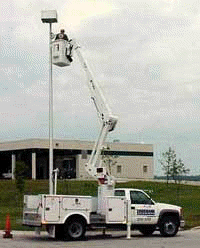
services. Ask us about LED, parking area illumination, planning consultation. Commercial and Industrial facility electrical contractors providing Bucket Truck Service. Online Estimates. Commercial Property
Area Lighting. Quick auto damage repair. Routine Maintenance. Pole Damage Repair and/or Replace with LED. Underground Power Service. New Parking
Lot Poles. Restaurant Lighting, Signs, Equipment, Neon. |
|
Yes, we have the lighting poles you are looking for. Wide variety: sizes, colors, lengths, round or square.
- We install. Electrical service post, Pole for electrical service, Temporary power pole, Parking lot lighting,
- Special pole lighting. Parking Lot Lighting Service, Online Estimates use
ablegroup@verizon.net |
Commercial Property Area Lighting and Alternatives. High Reach Bucket Services.
We are high reach electrical service experts .
Swaying Poles and Lighting Pole Foundation Renewal. |
 Parking Area and Light Pole Fixture Services.
 |
 Routine Maintenance, Re-Lamp, Re-Ballast. Routine Maintenance, Re-Lamp, Re-Ballast.
Pole Damage Repair and/or Replace. New Installations and/or Changes needed.
Underground Power Service. Quick & Honest Electrical Service for over 25 years.
New Parking Lot Poles & Exterior Area Lighting. A. to Z. Services Provided - Reasonable Rates. |
|
|
Poles and Pole Fixture Heads - sizes, lengths, shapes and colors |
|
|
|
|
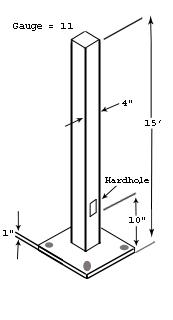
15FT $1,505.00 |
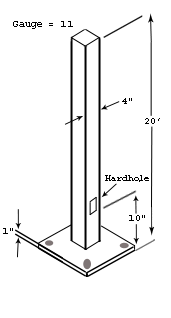
20FT $1,685.00 |

25FT $1,825.00 |
Street Lights, Parking Lights, Post Lighting,
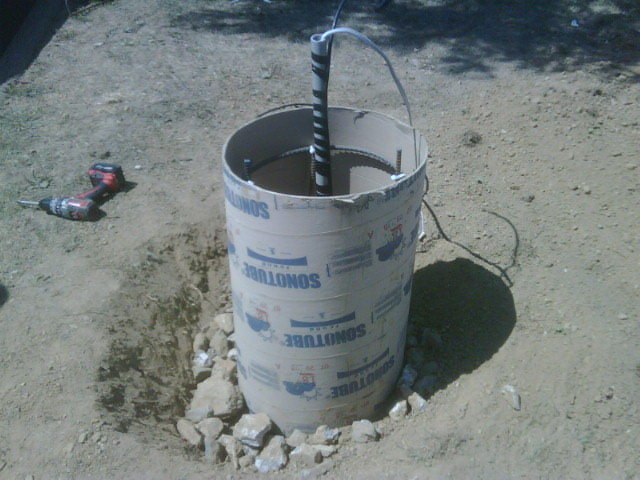
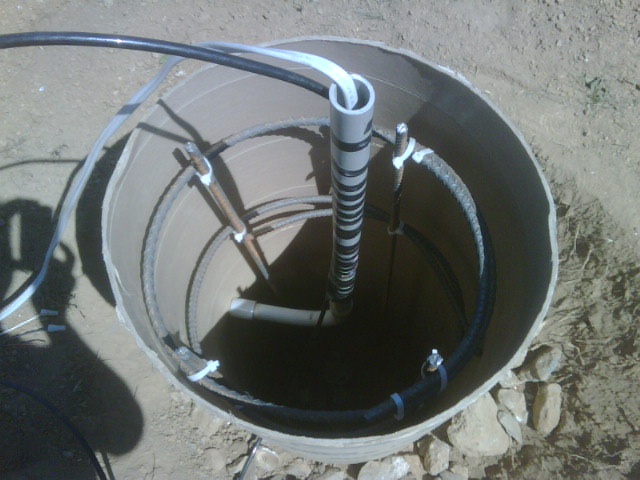
Good Installations begin at the bottom. |
 |
 |
 |
| with Reinforced Concrete, horizontal & vertical. |
|
Various type of lighting poles for parking lot lighting and wide area illumination.
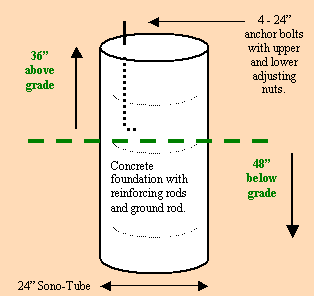
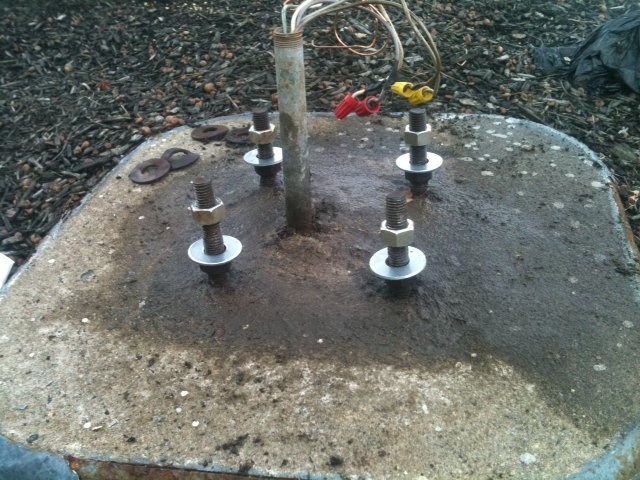
These Pole Fixtures are supported by a 24" diameter, reinforced concrete foundation (55" deep), with 24" long X 3/4" diameter embedded anchor
bolts. The Fixture Heads are available in H.P.S. (amber color light) or M.H. (white light) and are available in 150, 250 & 400 watts.
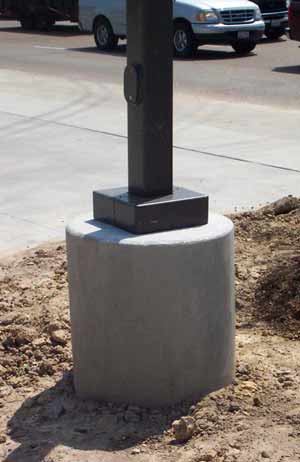
This typical foundation shown on the right is an industry standard for a 20 ft. pole and costs approx. $1,000.00 Call us for a new parking lot
lighting design. We'll visit your property and design a lighting plan that is both cost effective and energy efficient. Our years of experience in
providing good common sense planning and installations makes us the one to choose.
|
Utility poles are divided into ten classes, from 1 to 10. The classes' definition specifies a minimum circumference that depends on the species of tree and the length of the pole. This circumference is measured 6 feet from the butt of the pole.
There is also a minimum top circumference that is the same for all species and lengths.
For example, a class 1 pole has a minimum top circumference of 27 inches. If it is 25 feet long and cedar (most utility poles are cedar),
the circumference measured 6 feet from the bottom must be at least 43.5 inches.
The higher the class number, the skinnier the pole. Pole lengths start at 16 feet and increase by 2-foot steps to 22 feet,
then by fives from 25 feet to 90 feet. A 90-foot class 1 western red cedar pole weighs about 6,600 pounds. A 16-foot pole weighs only about 700.
Standards (from ANSI) severely limit or exclude various types of damage, including bird holes and insect boring,
and describe ways of specifying the pole's straightness.
On curves, hillsides, or other locations where there's an unbalanced pull on the pole, standard practice calls for increasing
the portion of the pole that is buried. For example, for poles being set along a straight line, 6 feet of a 35-foot pole would be buried, but if the pole
were on a curve, 6.5 feet.
A 35-foot pole is a typical length used in cities to carry one or two
cross arms. Poles are spaced about 100 feet to 150 feet apart,
with 125 feet being typical.
| |
|